The Complete Guide to AI Workers for UK Small Businesses
You've probably heard the buzz about AI Workers. They're everywhere in business headlines, LinkedIn posts, and tech conferences. But between the hype and the jargon, it's hard to know what AI Workers actually mean for your small business.
This guide cuts through the noise. We'll explain what AI Workers are, how they differ from traditional automation, what they can realistically do for UK small businesses, and how to decide if they're right for you.
What Is an AI Worker?
An AI Worker is an artificial intelligence system designed to handle business tasks autonomously. Unlike traditional software that follows rigid rules, AI Workers can understand context, make decisions, and adapt to new situations.
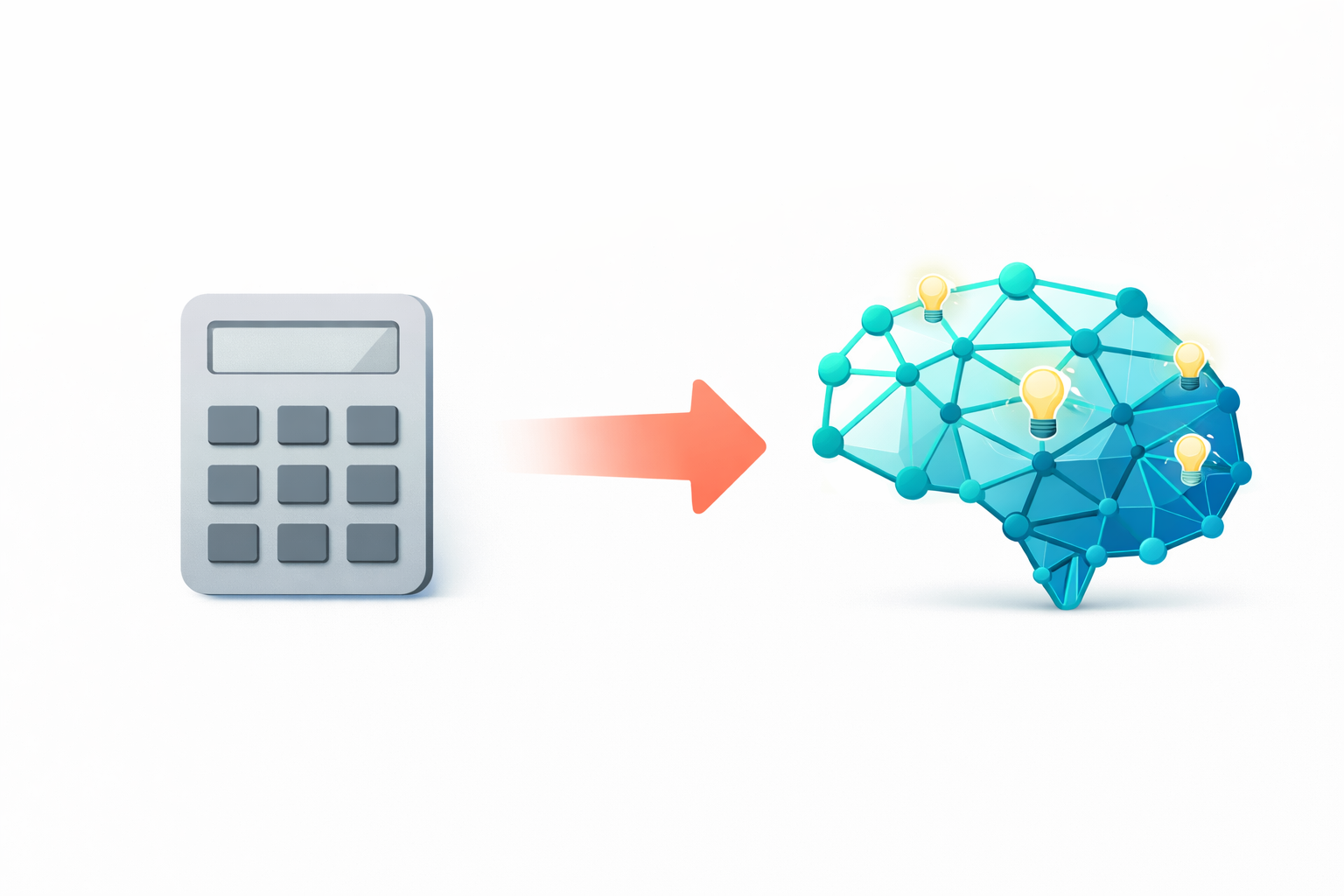
Think of the difference between a calculator and a junior employee. A calculator performs the exact operation you input. A junior employee understands what you're trying to achieve and figures out the steps to get there, asking questions when needed and learning from experience.
Traditional automation says: "When an email arrives with 'invoice' in the subject line, move it to the invoices folder."
An AI Worker says: "This email contains an invoice attachment. The amount matches our outstanding order with this supplier. I'll extract the details, check it against our purchase order, flag the 3% discrepancy for review, and prepare the payment for approval."
The technical term you'll often hear is "agentic AI." This describes AI systems that can take actions independently, working toward goals rather than simply responding to commands.
How AI Workers Differ from Chatbots and Basic Automation
The market is flooded with tools calling themselves "AI-powered." Understanding the distinctions helps you evaluate what you actually need.
Basic automation follows predetermined rules. If X happens, do Y. These tools are reliable and predictable but can't handle exceptions or ambiguity. They break when situations fall outside their programmed parameters.
Chatbots respond to queries using pattern matching or language models. They're reactive—they wait for input and provide responses. Most can't take actions beyond generating text, and they typically handle one conversation at a time without memory of previous interactions.
AI Workers combine language understanding with the ability to take actions across multiple systems. They can manage ongoing processes, remember context, handle exceptions intelligently, and work proactively rather than just reactively.
The key differentiator is agency. AI Workers don't just answer questions—they complete tasks. They don't just draft an email—they send it, track responses, and follow up appropriately.
What Can AI Workers Actually Do?
AI Workers excel at tasks that require judgment within defined boundaries. They're particularly effective for work that combines repetitive elements with situational decision-making.
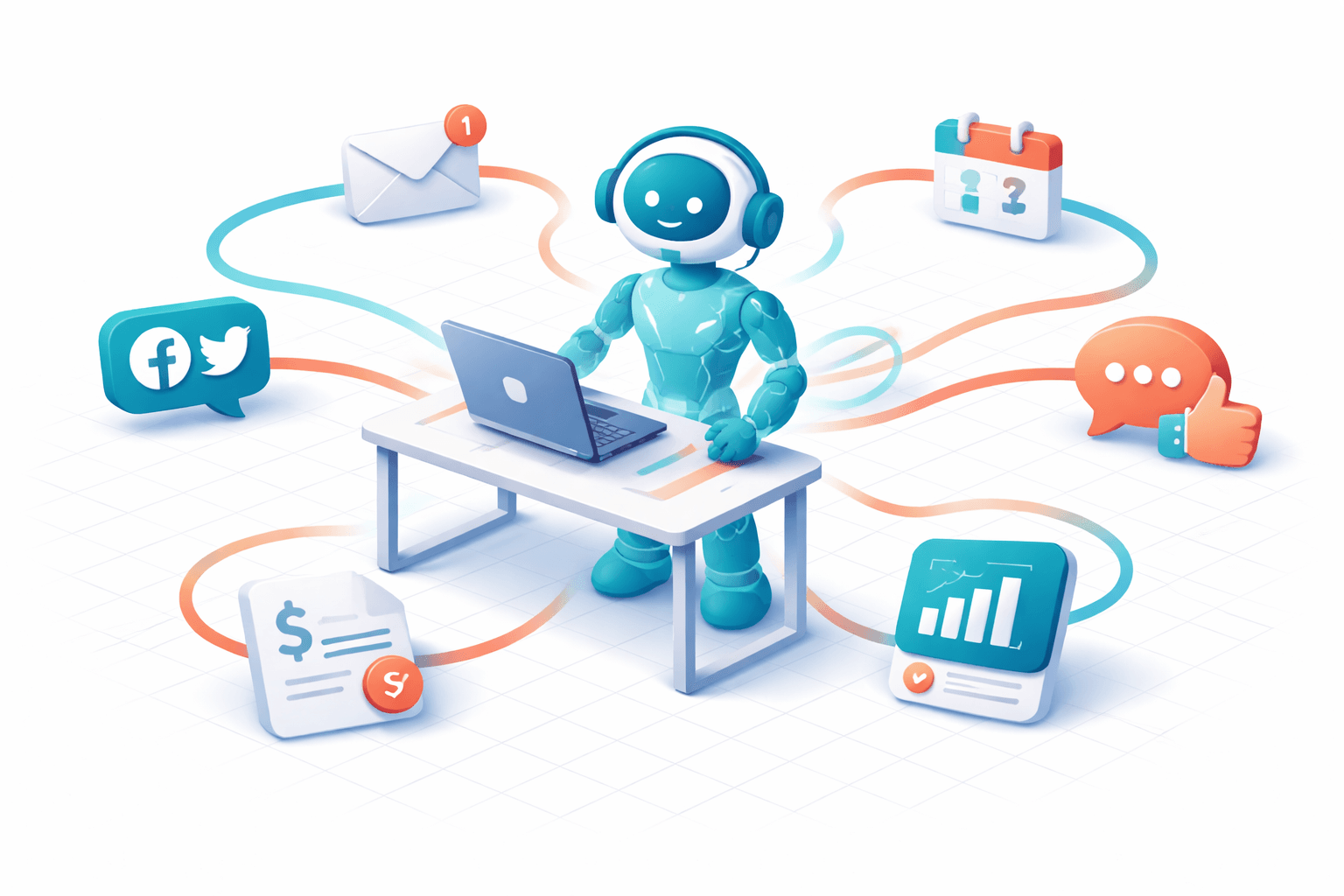
Customer communication represents a natural fit. AI Workers can handle inquiries across email, chat, and social media, understanding context and providing personalised responses. They know when to resolve issues independently and when to escalate to humans.
Administrative coordination benefits enormously. Scheduling meetings across multiple calendars, processing expense claims, managing document workflows, and coordinating between team members—all tasks where AI Workers shine.
Sales and lead management becomes more consistent. AI Workers can qualify leads, send appropriate follow-ups, update CRM records, and alert sales staff when prospects show buying signals.
Financial administration grows more efficient. Invoice processing, payment reconciliation, expense categorisation, and basic bookkeeping tasks can all be handled with appropriate human oversight.
Research and analysis scales effectively. AI Workers can gather information from multiple sources, synthesise findings, and present summaries tailored to specific decisions.
The common thread: these tasks require intelligence but follow patterns. They demand consistency across high volumes. They benefit from 24/7 availability. And they free human workers for higher-value activities.
What AI Workers Cannot Do
Honest assessment of limitations matters more than marketing claims. AI Workers have real constraints you should understand.
Complex judgment calls remain human territory. Decisions involving significant financial risk, legal implications, or reputational stakes should involve human review. AI Workers can prepare information and recommendations, but final authority should rest with people.
Genuine creativity isn't their strength. AI Workers can generate content variations and adapt templates, but truly original creative work—brand strategy, innovative product concepts, breakthrough marketing campaigns—requires human imagination.
Relationship building needs the human touch. AI Workers can maintain communication consistency, but the trust and rapport that close major deals or resolve serious complaints comes from human connection.
Handling unprecedented situations challenges AI systems. When something genuinely new occurs—a situation with no historical parallels—AI Workers may struggle. They work best in domains with established patterns.
Physical tasks obviously remain beyond reach. AI Workers exist in the digital realm. They can coordinate physical work but can't perform it.
The smartest implementations pair AI Workers with human oversight. The AI handles volume and consistency while humans provide judgment and creativity where they matter most.
The Business Case for AI Workers
Understanding the economics helps determine whether AI Workers make sense for your situation.
Time recovery provides the most tangible benefit. UK small business owners report working 50+ hours weekly, with significant portions spent on administrative tasks. AI Workers can reclaim 10-20 hours weekly for strategic activities or improved work-life balance.
Cost comparison favours AI Workers for appropriate tasks. A capable AI Worker costs roughly £50-200 monthly. A part-time administrator costs £800-1,500 monthly at minimum wage. For tasks within AI capabilities, the economics are compelling.
Consistency improvements compound over time. Human performance varies with energy, mood, and attention. AI Workers deliver the same quality at 3am as at 10am, on Monday or Friday, regardless of circumstances.
Scalability changes the growth equation. When customer inquiries double, human teams need expansion—hiring, training, management. AI Workers scale instantly to handle increased volume without proportional cost increases.
Error reduction saves hidden costs. Every invoice error, missed follow-up, or customer service failure carries costs. AI Workers don't get distracted, forget, or make typos.
The ROI calculation for most small businesses shows positive returns within one to three months of implementation.
AI Workers and UK Employment Law
A common concern deserves direct address: how do AI Workers interact with employment obligations?
AI Workers are software tools, not employees. They don't create employment relationships, require workplace pensions, or generate PAYE obligations. Using AI Workers is legally equivalent to using any other business software.
However, practical considerations exist. If AI Workers interact with your customers, you may need to disclose this in certain regulated industries. Financial services, healthcare, and legal sectors have specific rules about automated decision-making.
GDPR implications require attention. AI Workers processing personal data must comply with data protection requirements. Ensure any AI Worker service has appropriate data processing agreements and, for UK businesses, confirms data residency compliance.
The UK government's approach to AI regulation continues evolving. Stay informed about developments, particularly if operating in regulated sectors.
Choosing an AI Worker for Your Business
The market offers numerous options with varying capabilities, pricing, and focus areas. Here's how to evaluate them.
Define your use case first. Generic "AI assistants" often underperform compared to solutions designed for specific tasks. Know exactly which processes you want to automate before shopping.
Assess integration capabilities. An AI Worker is only useful if it connects with your existing tools. Check compatibility with your email system, CRM, accounting software, and other core applications.
Evaluate the training requirement. Some AI Workers require extensive setup and configuration. Others work effectively with minimal onboarding. Consider your available time and technical comfort.
Understand the pricing model. Common structures include monthly subscriptions, per-message fees, and usage-based pricing. Calculate expected costs based on your actual usage patterns.
Check UK suitability. Features like VAT handling, British English communication, UK business hour awareness, and GDPR compliance aren't universal. Verify these capabilities before committing.
Test with real scenarios. Most services offer trials. Use them with actual business situations, not just toy examples. Performance on your real tasks matters more than demo capabilities.
Review human oversight options. Good AI Worker platforms let you set approval requirements, review outputs, and intervene when needed. Avoid systems that operate as black boxes.
Implementing AI Workers: A Practical Approach
Successful implementation follows predictable patterns. Learn from businesses that have done this well.
Phase 1: Select a Pilot Process
Choose one well-defined process for initial implementation. Good candidates share these characteristics: high volume of repetitive instances, clear success criteria, limited exception handling required, and low risk if errors occur.
Customer inquiry responses, appointment scheduling, and invoice processing all make excellent pilots.
Phase 2: Document Current State
Before implementing anything, document how the process works today. What triggers it? What steps are involved? What information is needed? What outputs are produced? What exceptions occur?
This documentation serves as your implementation guide and provides a baseline for measuring improvement.
Phase 3: Configure and Test
Set up the AI Worker according to your documented process. Then test thoroughly with historical examples. Feed it past inquiries, invoices, or scheduling requests. Compare its outputs to what humans actually did.
Identify gaps and edge cases. Refine configuration until performance matches or exceeds human handling.
Phase 4: Supervised Operation
Run the AI Worker in production with human review of all outputs. This catches issues that testing missed and builds confidence in the system. Gradually reduce supervision as reliability is demonstrated.
Phase 5: Autonomous Operation with Monitoring
Once confidence is established, allow autonomous operation with exception flagging. The AI Worker handles routine cases independently while alerting humans to unusual situations.
Continue monitoring performance metrics. Regular review ensures the AI Worker remains effective as your business evolves.
Phase 6: Expansion
With one process running successfully, apply lessons learned to additional use cases. Each subsequent implementation moves faster as you develop organisational competence.
Common Implementation Mistakes
Learn from others' errors to avoid repeating them.
Trying to automate everything at once overwhelms teams and creates debugging nightmares. Sequential implementation with validation between phases produces better outcomes.
Choosing the wrong pilot process discourages adoption. Starting with high-stakes, exception-heavy processes maximises failure risk. Build success with simpler processes first.
Insufficient testing leads to embarrassing failures. AI Workers will encounter situations your testing didn't cover. Extensive, varied testing reduces surprise failures.
Neglecting change management creates resistance. Team members may feel threatened or confused. Clear communication about how AI Workers will affect their roles smooths adoption.
Inadequate monitoring allows drift. AI Worker performance can degrade as business conditions change. Regular review catches problems before they compound.
Over-trusting outputs without verification risks errors. AI Workers can be confidently wrong. Maintain appropriate skepticism, especially for consequential decisions.
AI Workers and Your Team
Introducing AI Workers affects your human team. Thoughtful handling of this transition matters.
Be transparent about intentions. Uncertainty breeds anxiety. Explain clearly what AI Workers will do, what humans will continue doing, and how roles may evolve.
Position AI Workers as tools, not replacements. The goal is augmenting human capability, not eliminating it. Emphasise how AI Workers free people for more interesting, valuable work.
Involve team members in implementation. Those who do the work understand it best. Their input improves AI Worker configuration and builds ownership of the outcome.
Provide training and support. Working alongside AI Workers requires new skills—reviewing outputs, handling escalations, managing exceptions. Invest in developing these capabilities.
Recognise changed contributions. As roles evolve, ensure recognition and compensation reflect new value creation rather than old task completion.
The businesses seeing best results from AI Workers are those treating implementation as a team effort rather than a top-down imposition.
The Future of AI Workers
The AI Worker landscape continues evolving rapidly. Understanding trajectories helps with planning.
Capability expansion continues steadily. Tasks requiring more nuanced judgment become feasible as underlying models improve. Expect AI Workers to handle increasingly complex processes.
Multi-agent collaboration is emerging. Rather than single AI Workers handling individual processes, coordinated teams of specialised agents will manage entire business functions.
Industry specialisation is accelerating. Generic AI Workers give way to solutions deeply tailored to specific sectors—accounting practices, legal firms, healthcare providers, retail businesses—with built-in domain expertise.
Integration depth is increasing. AI Workers will connect more deeply with business systems, moving beyond surface-level automation to fundamental process transformation.
Accessibility continues improving. Costs decrease while ease of use increases. Capabilities once requiring enterprise budgets become available to sole traders.
For UK small businesses, this trajectory means AI Workers will become increasingly practical and beneficial over the coming years. Starting now builds experience and competitive advantage.
Making the Decision
AI Workers aren't right for every business or every situation. Here's how to decide.
AI Workers make sense when:
- You spend significant time on repetitive tasks that follow patterns
- Consistency and availability matter for customer experience
- Growth is constrained by administrative capacity
- You're comfortable with technology and willing to manage new tools
AI Workers may not be right when:
- Your work is primarily creative or relationship-based with little repetition
- Task volumes are too low to justify implementation effort
- Regulatory constraints limit automated processing in your sector
- You prefer handling everything personally and aren't seeking growth
The middle ground works for many businesses: starting with limited AI Worker deployment for specific processes while maintaining human handling for others. This captures benefits while managing risk.
Most UK small businesses will benefit from AI Workers for at least some processes. The question isn't whether to adopt, but which processes to start with and when.
Getting Started Today
If AI Workers seem right for your business, here's how to begin.
This week: Identify your most time-consuming repetitive tasks. Track time spent on each for accurate assessment.
Next week: Research AI Worker solutions suited to your top candidates. Request demos and trials.
This month: Select one process and one tool. Begin implementation following the phased approach outlined above.
Ongoing: Monitor results, refine configuration, and expand to additional processes as confidence builds.
The businesses gaining advantage from AI Workers in 2026 aren't waiting for perfect conditions. They're starting with imperfect but improving systems, learning through experience, and building capabilities competitors lack.
Your first AI Worker won't be perfect. But it will be the beginning of transforming how your business operates.
Frequently Asked Questions
What exactly is an AI Worker?
An AI Worker is an artificial intelligence system that performs business tasks autonomously. Unlike basic automation that follows fixed rules, AI Workers understand context, make decisions, and adapt to different situations. They can handle tasks like customer communication, scheduling, invoice processing, and administrative coordination—working toward goals rather than just executing commands.
How much do AI Workers cost for small businesses?
AI Worker costs vary by capability and usage. Basic solutions start around £30-50 monthly, while comprehensive platforms typically range from £100-200 monthly. Some services charge per message or transaction rather than flat monthly fees. Most small businesses find AI Workers cost significantly less than equivalent human capacity while providing 24/7 availability.
Will AI Workers replace my employees?
AI Workers are best understood as tools that augment human capability rather than replace it. They handle repetitive, high-volume tasks, freeing employees for work requiring creativity, judgment, and relationship building. Businesses typically redeploy staff to higher-value activities rather than reducing headcount. The goal is doing more with your existing team.
Are AI Workers suitable for customer-facing communication?
Yes, with appropriate implementation. AI Workers can handle customer inquiries effectively, providing fast, consistent responses around the clock. Quality depends on proper configuration and training. Best practices include clear escalation paths to humans for complex issues and transparency about AI involvement where appropriate. Many customers prefer quick AI responses over delayed human replies.
How do AI Workers handle sensitive business data?
Reputable AI Worker platforms implement strong data security measures including encryption, access controls, and compliance certifications. For UK businesses, verify that providers offer GDPR-compliant data processing and appropriate data residency options. Review data processing agreements carefully and understand how information is stored and used.
Can AI Workers integrate with my existing software?
Integration capability varies by platform. Most AI Workers connect with common business tools including email systems, calendars, CRM platforms, and accounting software. Before selecting a solution, verify compatibility with your specific tools. Some platforms offer hundreds of integrations while others focus on specific ecosystems.
How long does it take to implement an AI Worker?
Simple implementations can be operational within days. More complex deployments involving multiple integrations and custom configuration may take several weeks. Plan for a supervised operation period where humans review AI Worker outputs before full autonomous operation. Most businesses achieve stable deployment within one to two months.
What happens when an AI Worker makes a mistake?
All systems occasionally err. Good implementation includes human review points for high-stakes outputs and monitoring for unusual patterns. When errors occur, they're typically caught quickly and easily corrected. Document errors to improve future performance. Most customers and colleagues are understanding about occasional issues if resolved promptly.
Do I need technical skills to use AI Workers?
Modern AI Worker platforms are designed for non-technical users. You don't need coding knowledge for standard implementations. Setup typically involves connecting accounts, configuring preferences, and providing examples of desired handling. More complex customisations may benefit from technical assistance, but most small businesses manage independently.
How do AI Workers comply with UK regulations?
AI Workers themselves are software tools with no direct regulatory status. However, their use must comply with relevant regulations including GDPR for data protection, sector-specific rules for regulated industries, and consumer protection requirements. Choose platforms with UK compliance features and consult appropriate advisors if operating in heavily regulated sectors.

TheyWork Team
TheyWork gives small UK businesses an AI-powered worker that finds leads, writes content, responds to reviews, and handles admin — so you can focus on growing.
Ready to try an AI Worker?
Get your own AI worker that finds leads, writes content, and handles admin. Start free for 7 days.
Get startedRelated articles
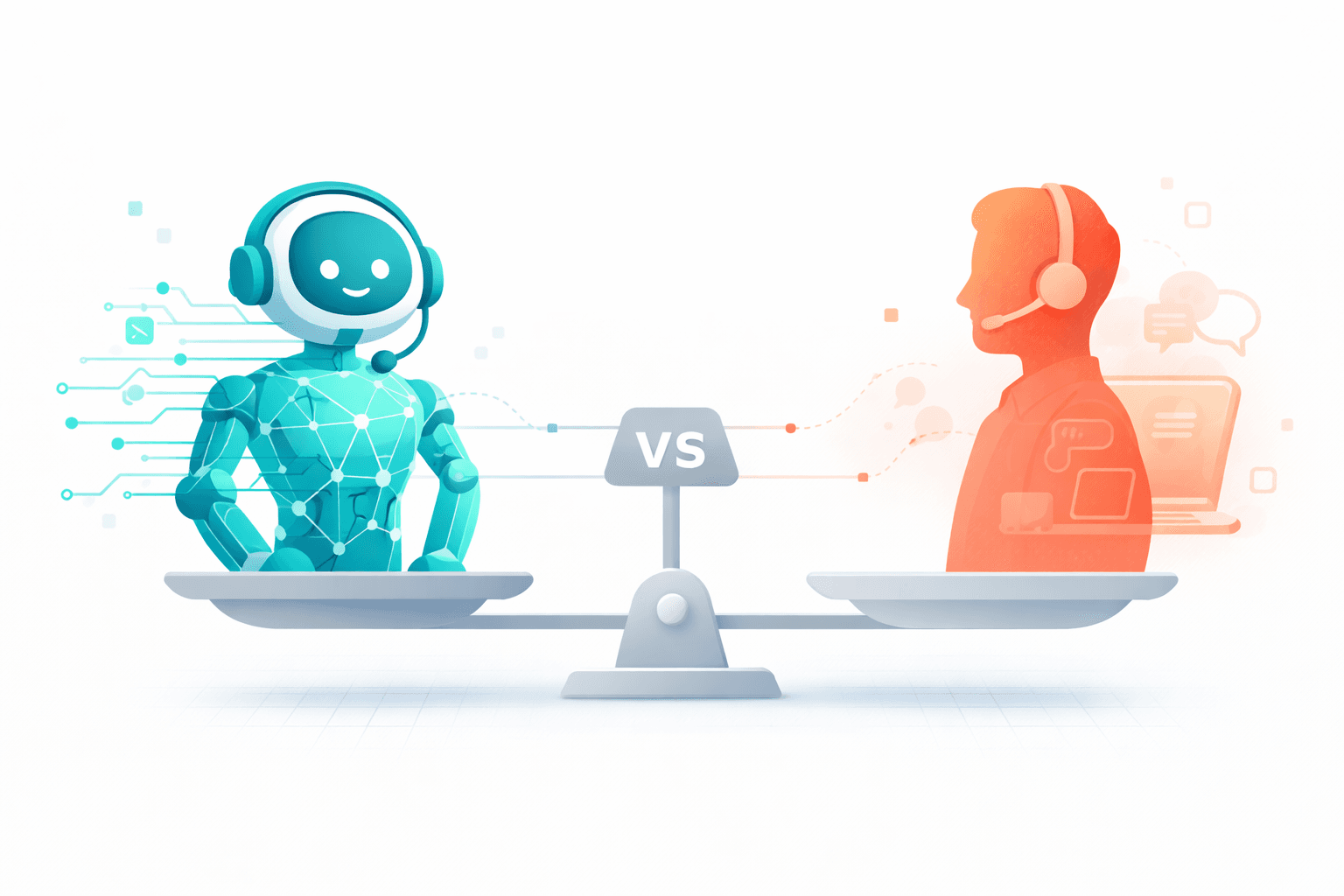
AI Workers vs Virtual Assistants: Which Is Right for Your Small Business?
Comparing AI Workers and virtual assistants for UK small businesses. Understand the costs, capabilities, and limitations of each to make the right choice for your business.
How to Automate Your Small Business in 2026: The Complete UK Guide
Learn how to automate your small business in 2026. Discover AI tools, workflow automation strategies, and practical tips to save 15+ hours weekly. Perfect for UK SMEs.